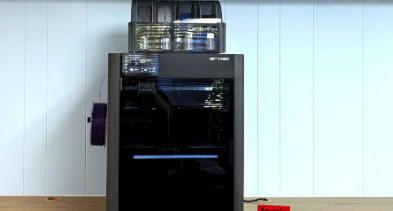
The evolution of 3D printing technology has transformed manufacturing, prototyping, and design workflows, making automation a critical factor for efficiency. Among the latest innovations, the Bambu Lab H2C printer stands out for integrating advanced automation features that streamline the printing process while maintaining high precision. Businesses and hobbyists alike are increasingly leveraging these capabilities to reduce human error and enhance productivity.
How does automation enhance 3D printing efficiency?
Automation in 3D printing primarily focuses on reducing manual interventions, which traditionally consume time and increase the risk of errors. Reports indicate that printers with automated calibration and material handling can cut setup times by up to 40%, significantly accelerating project completion rates. By incorporating features such as automatic bed leveling, filament detection, and AI-assisted error correction, modern printers minimize downtime and material waste.
What makes the Bambu Lab H2C printer unique in automation?
The H2C printer incorporates multi-layered automation processes that optimize every stage of printing. Its built-in sensors and real-time monitoring systems provide immediate feedback on print quality, allowing adjustments mid-process. Industry statistics show that printers equipped with such automated monitoring can reduce print failures by nearly 35%, leading to more consistent outputs and less material loss. Additionally, this printer supports seamless integration with workflow management software, enabling batch printing and remote operation.
How reliable is automated 3D printing for complex projects?
Automation has proven particularly valuable for complex or high-precision projects. Data from professional workshops suggests that printers with AI-driven error detection produce parts with dimensional accuracy improvements of up to 25% compared to manually calibrated systems. The H2C printer’s ability to predict and correct potential issues ensures that even intricate models are printed with consistent quality, making it ideal for engineering prototypes and detailed design work.
What are the broader industry impacts of automated 3D printing?
The rise of automated 3D printers is reshaping production statistics across industries. Surveys reveal that companies adopting fully automated printing workflows report a 30–50% reduction in labor costs associated with production setup and monitoring. Moreover, enhanced reliability decreases waste and operational inefficiencies, contributing to more sustainable manufacturing practices.
In conclusion, the integration of advanced automation in the Bambu Lab H2C printer demonstrates how cutting-edge technology can optimize printing efficiency, accuracy, and reliability. By reducing manual oversight and minimizing errors, businesses and creators can achieve faster turnaround times while maintaining high-quality outputs. For professionals seeking precision and efficiency, automated 3D printing represents a transformative step forward.
