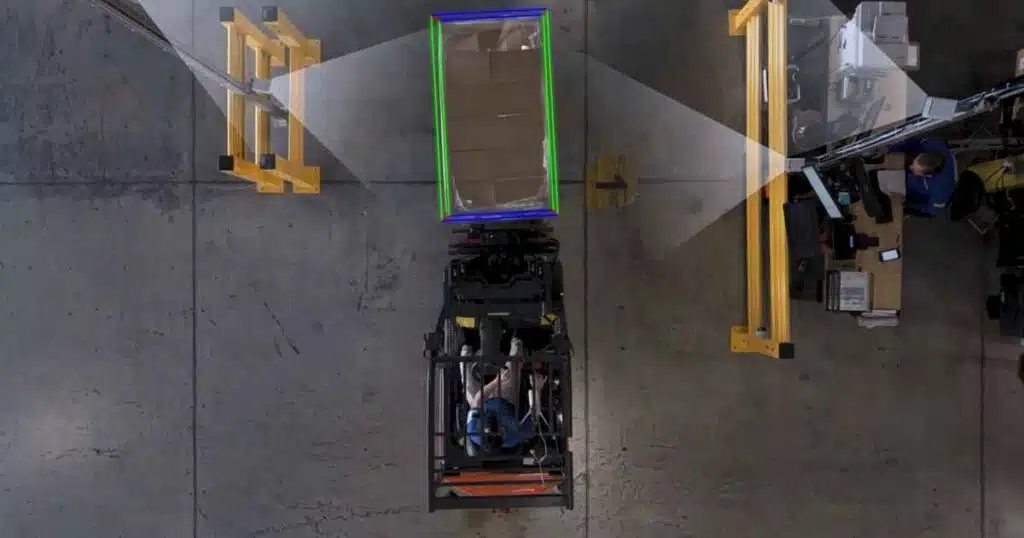
What role does accurate freight measurement play in modern warehouse operations? As logistics businesses handle increasingly diverse shipments, dependable dimensional data has become essential for planning, classification, billing, and space utilization. A dimensioner machine provides an efficient way to capture freight dimensions while reducing the limitations associated with manual measurement. By combining automated scanning, weighing, imaging, and data management, modern dimensioning systems help warehouse teams establish a more consistent measurement process.
What Is an Automated Dimensioning System?
An automated dimensioning system is designed to measure the length, width, and height of freight with minimal manual intervention. Advanced systems can also capture weight and photographic records during the same workflow. Three-dimensional scanning technology enables the equipment to identify the physical characteristics of parcels, pallets, and other freight, creating useful operational data for logistics teams.
Why Does Measurement Accuracy Matter?
Reliable measurements support better decisions throughout the shipping process. Inaccurate dimensions can affect freight classification, space planning, shipment records, and customer billing. Automated measurement helps create consistent data and reduces dependence on handwritten notes or repeated manual checks. This allows warehouse personnel to spend more time managing freight flow and less time performing repetitive measurement tasks.
How Does Automation Improve Warehouse Productivity?
Automation simplifies the measurement process by bringing several data-capture activities together. Depending on the configuration, freight can be scanned, weighed, and photographed during a single operational step. Some systems can also work with barcode scanning and automatic triggering methods, helping measurement fit naturally into existing warehouse procedures.
What Data Can Be Used for Analysis?
Dimensioning technology can generate more than basic measurements. Scan records may include freight dimensions, weight, volume, density, images, and three-dimensional mapping information. When this information is stored digitally, warehouse managers can review freight activity and identify operational patterns. Cloud-based data access can also make information available across locations and devices, supporting more informed logistics decisions.
Can Dimensioning Technology Support Different Freight Types?
Modern systems can be configured for different operational requirements. Parcel-focused equipment can support packages and smaller items, while pallet and roll-through solutions can accommodate larger freight. In-motion dimensioning can further streamline operations by capturing information while freight moves through a designated scanning area.
What Should Businesses Consider Before Implementation?
Warehouse leaders should evaluate freight characteristics, available floor space, workflow requirements, data integration needs, and the level of automation desired. Compatibility with existing warehouse software is also important because connected systems can transfer measurement information directly into established processes.
Ultimately, automated freight dimensioning is becoming an important part of data-driven logistics. By improving measurement consistency, simplifying information capture, and supporting better visibility, dimensioning technology can help warehouses create faster and more dependable workflows.
